Saturday, 11 February 2012


 Haripur  city is one of oldest cities of Khyber Pukhtoon Kha.
 There are few places over here to visit  with family &  enjoy .
Tarbela jheel (lake) is one of them. Its is a striking deep blue lake. Tarbela lake is built  on the Indus river.
 Lake is situated at a distance of 3 km to the south of Haripur city..
Tarbela lake is a very beautiful lake where while boating one can enjoy beautiful sights of the banks spread over miles. The half sunk hilly bank on the Tarbela Lake presents a fascinating view.  In summers water spreads upto  nearest town khalabat. People come here for fishing,   boating and hunting. At sunset the view of the lake is so enchanting.  A walk on the bank of the lake is so romantic .But for our own safety we should avoid it.What me love the most about this is the crops on the banks of the lake. The crops are there till mid april and the as the water rises the fields go underwater .  I remembered the wording of Henry David Thoreau, of after such a great view “A lake is a landscape's most beautiful and expressive feature. It is Earth's eye; looking into which the beholder measures the depth of his own nature.”

Tuesday, 17 January 2012

Gajar ka Halwa


Gajar ka halwa
Its  winter season here. Winter means different kind of halwa(pudding),dry fruits ,and oranges. And   yes that warm sandali( a pashkun traditional  way to keep warm),Aatisdan ( chimney fire). When ever there is  rain or snowfall   halwa  is   a must  dish.
Awwww dry fruit ,halwa ,oranges , yummmmm .


My way to make halwa.
Ingredients:
Carrots: 1kg    
Milk: half liter
Sugar: to taste (approx 6 tablespoon)
Oil or ghee: 3 tablespoon
 water to boil 
For Garnishing:
Walnuts: 5

Method:
Peel and grate the carrots. Take a pan boil carrots . Now add milk and sugar in it and   stir continuously .At the end add oil and stir continuously till its brown.

Garnish:
Garnish it with walnut.

Sever it  hot  gajar ka halwa

Sunday, 15 January 2012


Berries 

Berries, berries me know hardly two or three kind of berries. Hmmmmm, so thought to research about it  and then share. Berries are small fruits that are delicious, as well as nutritious. Berries are a favorite of the majority of people. Besides strawberry and blueberries. Me like   strawberries & raspberries. The botanical definition of a berry is a fleshy fruit produced from a single ovary.

Blackberries: These are the most common types of false berries found in UK. These berries are small dark, purple berries that are found as a major ingredient in jams and pies. These berries have high Vitamin C level.

Raspberries: These are small, tightly packed red false berries found during summer or autumn. Raspberries are used to make jams, jellies, pies and ice creams. They have high Vitamin C and manganese content. Raspberries also contain Vitamin K and magnesium.

Cloudberry: These are small brown colored berries that ripen in autumn. They are used to make jams, juices, tarts and liqueurs. They are high in Vitamin C content and has benzoic acids that act as natural preservative.

Nanny berry
Boysenberry: These are deep maroon colored, glossy, large, juicy berries that are a cross between raspberries, blackberries and loganberries. They are used as pie fillings and to decorate cheesecakes and tarts.
Marion berries: These are a cross between Chehalem and Ollallieberry cultivars. It is glossy and darker than blackberries. It is used to prepare pies, ice creams, jellies, etc.

Tayberries: These are a cross between a blackberry and raspberry. These are very fragrant and soft berries. They are used to prepare jams.

Blackcurrant: This popular flavored berry is like the red currant in appearance. It is used in jams, pies, ice creams, tarts, etc. Blackcurrant is packed with high Vitamin C content. It also has high levels of potassium, phosphorous, iron and Vitamin B5.

Bilberry: Bilberries are edible berries that are closely related to blueberries and huckleberries. They are nearly black in color with a slight hue of purple. The pulp is red or purple in color and can stain your fingers while eating the raw fruit. These berries are very difficult to cultivate and fruits are generally collected from the wild. They are used in different jams and dishes or eaten raw.


Blue berry
Blueberries: These berries are dark-blue or purple in color. These come under the false berry type. They are used in jams, purée, juice, pies and muffins. They contain high levels of antioxidants and can help prevent many diseases, like stomach ailments, heart degeneration and heart diseas.

Chokecherry: Also called bitter-berry or Virginia bird cherry they are closely related to Black cherry. The berries have a very sour, astringent taste. The ripe berries have a dark color and are not very astringent in taste. The red colored berries are not yet fully ripe and may be very sour to taste. They are used to make jelly, jam and syrup. They require a lot of sugar or sweeteners for preservation as they are slightly bitter in taste.

Gooseberries: These are small, round, oblong or teardrop shaped berries. They have a variety of colors like red, green and purple. Gooseberries are used to prepare gooseberry tarts, pies, puddings and fruit salads. Gooseberries are high in Vitamin C, Vitamin A, potassium, and manganese.

Red Currants: These are small round red or white berries that are used in making jams, tarts and salads. They have high Vitamin C, iron, potassium and fiber content.
Strawberries

Strawberries: These are the most popular fruits eaten all over the world. They are made to prepare a number of culinary dishes like jams, ice creams, coulis , tarts, pies, milk shakes, etc. Strawberries contain high Vitamin C, manganese and folic acid levels.

Grapes: Say grapes and you think of wine! Grapes are loaded with Vitamin A, C and B6. They also contain potassium, calcium, magnesium and folic acid. Grapes are the main ingredients for making wines. Try making homemade grape jellies, they taste excellent.

Acai Berries: These small, round black berries are the biggest cash crops of Brazil. Acai berries are used in juices, smoothies and other beverages. These berries are known for their antioxidant properties.

Goji Berries: These red berries are usually found dried and shriveled and are similar to red resins in appearance. They are also known as wolf berries. Wolf berries are usually cooked before consumption. They are used to prepare herbal tea, wines, rice congee, goji juice, etc. They contain 11 essential and 22 trace dietary minerals, 18 amino acids, 6 essential vitamins, carbohydrates, proteins, fats, dietary fiber, etc. 

Cranberries: These are epigenous berries that are white when unripe and turn red on ripening. They are used to make juices, sauces, wines, etc. There are many cranberry health benefits that have been recently discovered. Cranberries contain moderate levels of Vitamin C, dietary fiber, minerals and manganese.

Grapes
Elderberries: Also called Sambucus, these small, dark berries grow in clusters. They are black to blue in color. They are used in jams, cake mix, muffins and syrups. They are a good source of anthocyanins and antioxidants.

Huckleberries: Do not confuse the name Huckleberry with Huckleberry Finn. It is no way associated to the fictional character created by Mark Twain. This is a small round berry that looks and tastes similar to blueberries. They come in colors ranging from deep crimson to eggplant purple. They are used to make excellent jams, pies, syrups and preservatives.

Juneberry: These red berries turn blue-black on ripening. They are similar to the size of blueberries. They are easily distinguished by the crown on the end, away from the stock. They are great to make jams, muffins, cobblers, etc.

 juniper berry
Juniper berries: These berries are false berries that are actually modified cones. They berries are green in color and on ripening turn to purple-black. They are used to season pork, cabbage and sauerkraut. They are also used to prepare gin.

Lingo berries: These berries are also called cowberry, fox berry and mountain cranberry. Lingo berry is actually a false berry that is red in color. It is used to make lingo berry jam, juice, syrup, compote, sauce, etc. It is rich in Vitamin C, provitamin-A, Vitamin B (B1, B2, B3), potassium, calcium, magnesium and phosphorous.

Loganberries: This is a ruby-red, blackberry shaped berry. It is a very sweet, juicy berry that turns purple-red when ripe. They are used to prepare juices. Loganberries contain Vitamin C, calcium, iron, potassium, fiber and carbohydrates.

Mulberries: These berries remind me of the popular nursery rhyme, 'Here we go round the Mulberry bush'. This is a multiple fruit which has red, purple or black fruits. It is used to prepare pies, tarts, cordials, jams and 'sherbets'.
Ollaliberries

Ollaliberries: These are a cross between loganberries and youngberries. Ollaliberries look similar to blackberries. They are used to make jams, toppings for ice creams and yogurt, etc.

Sea-buckthorn Berries: These are orange color berries that are soft, juicy and rich in oil. There are many nutritional benefits of sea buckthorn oil. They are used to make pies, jams, lotions and liquors. It has high Vitamin C, arytenoids, Vitamin E, amino acids, dietary minerals, β-sitosterol.


Nannyberry: These are seasonal drupes that are blue-black in color. These sweet berries are eaten by many birds and animals.
Crowberry: These are dry black berries very similar to blueberry in taste and appearance. They are used as natural food dye, pie and jelly. The Native Americans use them to heal sore eyes. Crowberries have low vitamin content and high water content.

Service berries
Service berries: This berry-like pome is red to purple in color. It is a sweet berry that is used to make pies and jams.
Salmonberry: The ripen fruit has a sweet taste and it is yellow to orange-red in color. They are made into jams, candies, jellies and wines. The Native Americans eat these edible wild berries along with half-dried salmon roe, hence the name. Salmonberries are also called thimbleberries.

Barberry: The barberry fruit is a small berry that is red or dark blue in color. Barberries are long and narrow fruits like a bar, hence the name barberry. They are used to make jams and infusions. They are rich in Vitamin C.
Wild Rose: These are red and oval berries, also known as rosehips. They are the pomaceous fruits of rose plants. They are rich in Vitamin C content.

Oregon grape: These berries have a grape-like appearance and are purple or blue in color. They look as if they are covered in powder. They are known to be anti-inflammatory and anti-bacterial in nature.

Indian Plum: These berries have dark-blue or plum color and were thought to have medicinal properties by the Native Americans.

Jerusalem Cherry
Baneberry: Baneberries or bugbane are produced on a flowering plant that belongs to the family Ranunculaceae, called Actaea. The berries are the most poisonous part of the plant as they contain cardiogenic toxins. These toxins affect the cardiac muscle tissues that lead to cardiac arrect and death. The baneberries have a waxy, shiny appearance and are either red or white in color.

Jerusalem Cherry: These poisonous berries are often confused for cherry tomatoes.
Doll's Eyes: This berry is large and white and has a black mark that gives it the appearance of an eye. Doll's eyes are highly poisonous berries that you should watch out for.

Poke berry: These dark purple berries are poisonous to humans, whereas birds are able to ingest them. They are also called pokeweed, poke bush.

 I missed out lots of berries.  There are a few kinds of berries that are known to us and some that we may have never heard of. so enjoy reading about different kind of berries.
Thanks to
    Batul Nafisa Baxamusa

Monday, 9 January 2012


Spaghetti & meatball with capsicum


Ingredients:

Beef or chicken mince finely grounded (meatballs):300 gms
Chopped  capsicum:2 medium size
Chopped Onion: 1 medium size
Chopped Garlic: 1 tablespoon
Chopped Ginger: 1tablespoon
Cooking Oil: 4 tablespoon
Tamarind paste: 1 cup  
Water:  3 cups
Black pepper: Half teaspoon
Salt: To taste
Red chili: Half teaspoon

Method:
Boil spaghetti in boiling salted water for 5 to 7 minutes or cook till tender. Drain& rinse under cold water now add 1 tablespoon oil in it and set aside.
 Make balls of beef or chicken mince. Heat oil in pot, fry balls for 5 minutes. Remove meat balls from pan .Now add chopped onion, garlic paste, ginger paste, &fry it till light brown. Now add capsicum and fry it for a minute .Now add meat balls and, red chili and fry it for half minute. Add water & tarmarind paste to the mixture .cover it and cook it on slow heat.
At the end add spaghetti mix it well.
 Sever
Sever it hot.


Hujra and jirga

Hujra


Hujra   in  Pashto stands  for Mehmaankhana or Drawing room. Hujra is derived from   Arabic means room or cell.  The  place where guests are entertained by housemates in south India, Bangladesh, Pakistan. Its   also called  baithak in hindko . The term hujra is especially prevalent in the predominantly Pashtun areas of Pakistan. Pashtun hujra are used mainly to entertain male guests by household males. Although sometimes  community hujra are also maintained by tribal units. In individual houses, the size and trappings of a hujra are sometimes indicative of family status. At our side hujra is kind of community center where men come have chit chat with their fellow villagers.
Rabab
Some times   people gathered in hujra for jirga .
Jirga is pashtun tradition in which respected people from their communities sit together and solve problems of people. Everyone respect decision of jirga. 
In old days rabab was used to play by the local artistes at night in singing mahfel or singing get together.
The rabab tradition is dying now a day which makes me sad because I loved that tradition. 
 Tribal jirga 
In this picture you can view a traditional jirga being held for some problem between two groups. The charpai (bed) are being put upside down position. That indicates an old tradition of tribal jirga held on special circumstances


Sunday, 25 December 2011


Rice  Pakora

Ingredients:
Rice  : 1 cup (boiled rice from day before)
Salt  : To taste
Red chili  : half teaspoon
Yoghurt  :2 cup
Onion  :1 (finely chopped)
Garlic Paste : 1 tablespoon
Gram Flour : 1 cup
Green chilli : 3 to 2 (well chopped)
Cumin Powder :   A pinch
  Oil : for deep fry
Mothed :
  Take a bowl  put  boiled rice & pour  yoghurt over it .Cover the bowl & let it  soak for 2 hours. After  two hours add gram flour ,red chilli , chopped onion, garlic paste, green chili,
cumin powder & mix  them  well. Now heat  oil. Make shape of pakora  and fry it  all.

Sever :
Sever it with kepchup  or chilli sauce.

Friday, 9 December 2011


Wild life in Khyber Pakhtun Khwa


Pakistan

Khyber Pakhtun Khwa (KPK) is one of the richest provinces amongst four of the existing ones. KPK is famous for its rich & diverse culture with a great topographic diversity. It has vast plains, broken lands, low hills and high mountains of Himalaya-Karakorum, Hindukush, Koh Safaid and Suleiman ranges. Today, me going to talk about the wild life at KPK.
KPK supports 94 species of mammals out of the total 158 species found in Pakistan. Three of the six species endemic to Pakistan, namely: Whooly flying squirrel, Murree Vole, and Indus River Dolphin, are also found in KPK.
KPK has 453 birds’ species out of total 660 birds species present in Pakistan. There are 42 species of reptiles out of 174 species of reptiles present in Pakistan.
Important Wildlife species of the province are Indus Dolphin, Snow Leopard, Straight Horned Markhor, Western Horned Tragopan, Cheer Pheasant and Asian Cobra.
Me belong to Hazara which is famous for its silk route, wild life and beautiful hill stations. Kohistan inhabits a small population of the Markhor. In the Thakot, Kohistan area we can easily spot the Blind Indus Dolphins playing on the surface of Indus River.
As we move forward towards Mansehra, we have various kinds of birds like pheasants, doves, sparrows, quails, pidwegeons, etc. We also have two kinds of crows here: Mountain crows and white crows.
 The animals found in the Abbotabad region are deer, leopards, lions, monkeys,etc.
This is my little effort to highlight a few species of mammals and birds of hazara. Hope you liked what I wrote.
                                                                                                                                 
Maleeha Hayat

Monday, 5 December 2011


Roast Chicken With Sweet Corn


Ingredients:

 1 Chicken (cut into pieces) for 4 people
2 Tablespoon Ginger paste
2 Tablespoon Garlic paste
1 ½Tablespoon Green chilli paste
4 Tablespoon Yoghurt
1/4 Teaspoon Turmeric powder
Half cup Sweet corn
Salt to taste
Half cup cooking oil
Fresh Coriander  to garnish
Method:
         Take a bowl add chicken ,ginger paste,garlic paste ,greenchilli paste,yoghurt, sweet corn, salt,oil and marinate the chicken for half hour.
Place the marinated chicken in an ovenproof dish.
Add some butter on the top of the chicken mixture.
Cover it with lid or foil.
Bake at 180 degree for 35-40 minutes, then remove the cover and bake 5-10 minutes longer.At the end garnish  with fresh coriander leaves.
Serve:
         Serve hot. 

Wednesday, 26 October 2011

Prince Saif ul Malook and Badri Jamala


The Land of the fairies, no doubt it earned its name, as they say seeing is  believing. The breath taking view of the lake and the towering "malka parbat" meaning the Queen Mountain standing tall and invincible presents a classical picture of creator's work(Allah).Me was there in early 90 's for two hours & am still mesmerized. There is  story or legend about this place we heard there from local people and  read about it in storybooks.
 . The legend of the lake is very interesting and romantic. A Persian Prince, Saif ul Malook fell in love with a fairy princess, Badr-ul-Jamal(means glory of the moon), whom he saw in his dreams. The prince was restless until a Dervish (holy man) told him where to find her  by the lake and that he had to go through a tough exam to be able to marry the fairy because the prince was a human and she was a fairy. Thus the prince marched on his quest for the impossible in the name of love. He waited by the lake where there was no habitation, (there still isn't), no food, nothing. His long wait of 12 years, finally reaped harvest and one good morning he saw the fairy come to bathe with her maids and friends in the lake. The prince hid her wings as advised by the holy man. The fairy was very tense at not finding her wings. Eventually the prince appeared and told her about his tale of love and long wait, which moved the fairy and they agreed to marry. But there was a Safaid Deuo (the white giant) who was himself in love with the fairy got jealous and furious. In rage the giant cried and thus tear lake (ansoo jheel, approx. 2 miles away) was formed. The giant stepped angrily, the dam broke and the outlet to the lake Saif-ul- Mulook was formed. And the Deuo captured her. Took   her  to Malka Parbat( Mountain of Fairies) she was bound there. And she only can be free when the Deuo is dead, but he cannot defeat him using ordinary means,for the Deuo has hidden his soul in talisman of some sort and hidden it away ,Sail-ul-Malook and his army succeed  in finding the talisman and killing  Deuo . But   igniting a 40 year war between the  Deuo of the earth and those who dwell in the spirit world.
  In some sayings, the Deuo  stepped angrily, the dam broke and the outlet to the lake Saif-ul-Mulook was formed. The prince and the fairy princess fled away in a cave (which still exists and its length is unknown to this day). The legend says that both the prince and the fairy live in the centre of the lake saif-ul-mulook, and on every full moon night they emerge mounted on a white flying horse, the pagasus, from the centre of the lake. The depth of the lake has not been measured to this day,the last effort they say was made in late 90s but the measuring chain weighing 5 tons went down and vanished and the mystery of the lake dares us!           
* These  beautiful   lakes are in kaghan and naran  valley ,north east cost of Mansehra District , Khyber Pakhtunkhwa.Pakistan.
 * pictures are from google.

Tuesday, 25 October 2011


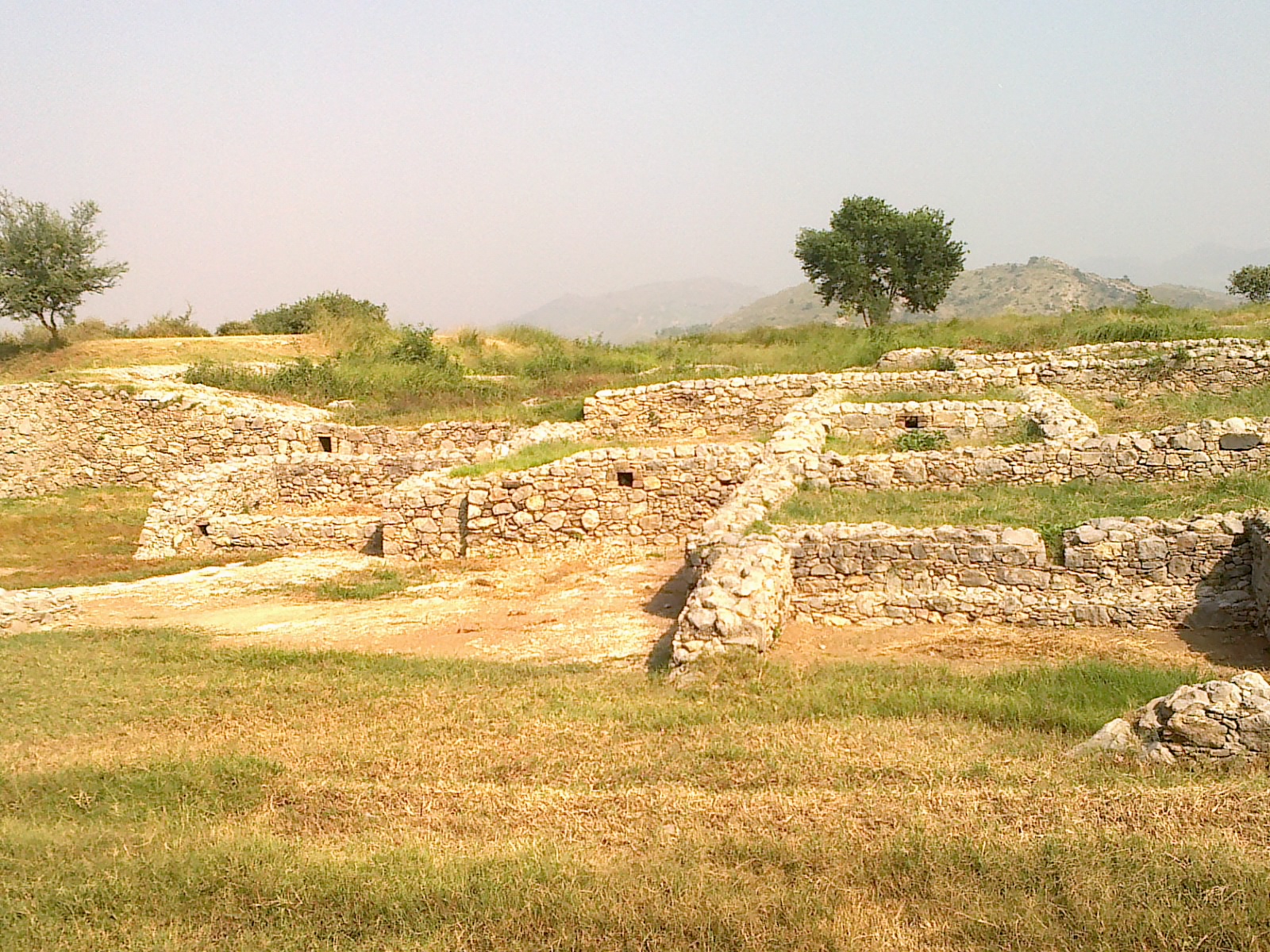
              After me thought  to  share about historic ruins great Taxila  city.  Taxila is several time  destroyed  and  rebuilt  by  different  rulers. Taxila is famous for its handicrafts.
Demetrius 1 of  Bactria
     Sirkup  is the name of an archaeological site on the bank opposite to the city  of Taxila, Punjab, Pakistan. The city of Sirkap was built by the Greco-Bactrian king Demetrius after he invaded ancient India around 180 BC. Demetrius founded in the northern and northwestern Indian subcontinent (modern day Pakistan) an Indo-Greek kingdom that was to last until around 10.B.C. Sirkap is also said to have been rebuilt by king Menander. The second city site of ancient Taxila presently as Sirkap is named after  one of the wicked character of a folk legend,Raja Rasalu and his seven demons. The excavation of the old city was carried out under the supervision of Sir John Marshall by Hergrew from 1912-1930. In 1944 and 1945 further parts were excavated by Mortimer Wheeler and his colleagues. The remains belong  to four distinct super-imposed periods of Per-Greek, Greeks ,Scythians and  Parthian. The city founded approximately in the first quarter of second century B.C. by the Bactrian Greek King Menander. The city was well planned and fortified. The Parthian king  Gondophares following the Greek pattern rebuilt the city with its main street in the middle studded with shops and places of worship like Apsidal Temple ,Sun Temple and Double-Headed  Eagle Stupa and  kings palace close to the eastern gate. Christian Apostle Saint Thomas came to Sirkap in 40 A.D.and was received by the king in his Royal Palace. The famous traveler Apollonius of Tyana who visited Taxila in 44 A.D mentions “Taxila about the size of Nineveh and walled like Greek city. The narrow streets arranged well like that of Athens”.  It was under Parthian that “Gandhara  Art
In about 60 A.D., The Great Kushanas completely swept away the Parthian and carved a mighty empire in India extending up to river Ganges. They laid the foundation of the third city site of Taxila at Sirsukh in about 80 A.D.
Taxila was a famous center of Jainism in the ancient times, many sanctuaries and ritual abject relating of this religion were recovered during excavation here.
A special Stupa at Sirkap is the so-called 'Double-Headed Eagle Stupa'. The pilasters here are of a Greek design, "Corinthian columns". In the middle arch, a Greek temple is shown; in the outer, a shrine of a Hindu design can be seen. On top of these sanctuaries, a double-headed eagle is seated from which the name of the Stupa has been derived. This motive is rather odd, to say the least, as it is originally Babylonian. It seems to have spread to Scythia, and introduced in the Punjab by the Saca rulers .One round Stupa is present at sirkap. It is one of the oldest Stupas in indo-Pak. It is assumed that this Stupa was uprooted and thrown to its present location by a strong earthquake in the 1st century AD. When the new city was built later, The  Stupa was kept by building a protecting wall around it. 

Friday, 7 October 2011


Grand Trunk Road
I was thinking what to write for last few days.Today i went to Islamabaad on my way from Taxila an ancient city.So i thought to share  about the great oldest & longest major road Grand Trunk Road. For several centuries,it has linked the eastren and western regions of the Indian subcontinent, running from Bangladesh, across north  India,into  Purushapura (  Peshawar)   in Pakistan,up to Kabul, Afghanistan.It was initiated during Maurya Empire in 3rd century(B.C.E)& later renovated &entended in 16th century (A.D) by Sher Shah Suri a pashtun emperor who then ruled much of Northern India.
 Original portion of the Grand Trunk Road from 1539 to1545 (A.D).It is also called Sadak-e-Azam.Fruit trees were planted on either side of the road.Grain & fodder were supplied for Horses and Cattle at each  caravanserai.This road runs from Kabul (Afghanistan) to Calcutta (India).Me & my daughter  enjoy  a lot.My daughter    running around with  joy & all excitement.There  was  a market near by.We had our lunch in a small  road side hotel( Dhaba).I loved their  tea which we had after lunch.After lunch  we had small  walk  on this  ancient road.I was thinking about that time.Found myself  there &felt i am surrounded by them.I was having wonderfull feelings that time.It  will take a  while  to get back in a the real world.

Monday, 26 September 2011


Hyderabadi chicken Biryani

Ingredients:
 Chicken (cut into 12 pieces)=1 kg
 Plain Yogurt = 2 cup
 Long Grain Rice = 6 cup ( for 6 peoples)
 Red Chilli Powder = 1 teaspoon
 Ginger Paste = 1/2 tablespoon
Coriander leaves = Finely chopped , half cup
 Garlic Paste =1/2 table spoon
Lemon Juice (from 4 lemons)= 3 tablespoon
 Fresh Mint Leaves finely chopped=half cup
 Green Chillies (finely chopped)=4
 Whole Black Peppercorns = 6
Cardamom seeds =6
 Onions(medium, thinly sliced,fried them before use)=2
Oil = 2cups
 Salt (to taste)

Method
Wash chicken pieces with cold water and drain well. Seperately in a bowl mix together ginger paste, garlic paste, red chilli powder, plain yogurt,lemon juice, fried onions(half of them)oil one cup . Marinate chicken pieces in this mixture and set aside for 30 minutes.
 Rice
Boil rice in water in a large pot until rice is parboiled and drain. Now remove the pot  from  heat.
Now take  large pot.Heat it. Add  the remaining  oil ,fried onions,lemon juice,chopped mint, coriander leaves ,chicken & in the  end  make  one layer of rice.
Simmer
Simmer  the rice  for  ten mintues on high flame& then  low the  flame till  15 mints.After its tender mix it gently .(Use rotimaker for simmer to have  good  results. put flat rotimaker on heat. heat it  up put pot on it and  them simmer then  rice.)
Raita

Ingredients:
 Plain Yogurt = half kg
 Zera = A pinch
salt to taste
 Red Chilli Powder=1 teaspoon
Method
Take Yogurt in a  bowl ,add zera ,salt, red chilli powder mix them .


Sever 


Sever   delicious biryani  with raita .

Monday, 19 September 2011


Sour Chicken

Ingredients:

Chicken = 1kg
Oil = 1cup
Yoghurt= half kg

Tomatoes= 2
Salt to taste

Blackpepper  to taste
Onion (well chopped)=1

Garlicpaste =1 table spoon
Ginger paste =1 table spoon
Method

Clean chicken put it in a bowl now add onion ,garlic paste,ginger paste,tomato,salt,blackpepper ,mix them well.
Take a pan heat oil now.Put chicken in it  and cover it.Low the flame and cook it till chicken is tender .
Sever
Ingredients
Onion =1
Tomato=1
White radish =1
Method
Slice  them in round shape .Garnish it . now  sever  it with naan bread.

Saturday, 17 September 2011


Kajal (Kohl)
Sweet friends today i want to share some precious kohl (kajal) case and a beautiful pouch.
kolh (kajal) is an ancient eyes cosmetic.
kohl is arabic word. Personally, i love it!
my makeup is imcomplete without it.
This silver case is made of pure silver.
Its also a gift  from my grandmom .
hurrayyyy  to  grandma.
The colorful pouch is  a gift from my afghani friend.
Embroidery is with silk twigs.
Afghani females  are so  good  in embroidery.
  kohl has been worn traditionlly since 3500 B.C .It was originally used as protection against eye ailments.


Friday, 16 September 2011


Plum sauce
Ingredients:

Plum :8 to 10 ( I prefer fresh ones) one can try dry also
 Suger =2 table spoon
Salt to taste
Red chillies = 2 table spoon
Water =half cup

Method

Take a  blender peel plums take out the seeds ,add  suger ,salt ,redchillies and water blende then very  well .
Sever 
Take a bowl & put the sauce in it .


Finger Fish Biryani
 Ingredients:

Finger Fish = 500  gm
Rice = 4  to 5  cups ( for  4  or  5  people)
Oil =1 & half cup 
Oil = for  deep fry =2 cup
Onion( medium .thinly sliced)=4 
Tomato(medium,thinly sliced)=6
Garlic (paste)= 2 tablespoon
Ginger (paste)= 2 tablespoon
Green chillies (whole)=6-8
salt to taste 
Red chilli =1 teaspoon
Plums (dry) = 4 to 5
Cumin seeds (ground)=half teaspoon
Coriander (dry)= half teaspoon
Cinnamom (ground) =half teaspoon
Black pepper (ground)=half teaspoon
Mace (ground) =half teaspoon
Clove =6,7
Netmeg (ground)= half teaspoon
Finger Fish
 Ingredients:
Lemone juice = 2 tablespoon
Garlic paste = 1 teaspoon
Ginger paste =1 teaspoon
Redchilli = half teaspoon
salt to taste 
Method
 Take a bowl add lemone juice, red chilli, garlic paste, ginger paste,fish & marinate it for half hour.

Fry
Heat oil in a pan & deep fry fish till its brown. put it aside .
Rice
Take a other pan  add  10 cups of water ,salt and boil  it.Now add rice boil it until 3/4 done.
Cook 
 Heat oil ,fry onions  till  its  brown ,add ginger  paste , garlic paste, tomotoes, add ground masala, green chilli, plums, clove cook  it on low heat for 2 or 3 minutes .
Layer
Get a bigger  pan put some oil in it.Make  a layer of rice  put a layer of masala &fish . Cover with it second layer of rice.
Simmer
Simmer the rice for two mintues on high flame then flame ten mintues on low flame. After its tender mix it gently.
Sever 
Sever   delicious biryani . 

Tuesday, 13 September 2011

Attan


Attan
Today  am  going  tell   u  about   a  beautiful  dance form of  us pathans.
Attan is  a form of dance that originated in the pashtun region of Pakistan & Afghanistan.
Attan  began as  a  folk  dance conducted by pashtuns,in weddings ,newyears & informal gatherings.
Attan is a traditional pashtuns dance. It is said to be one of oldest Pashtun Pagan dance, some identify Attan as an a religious ceremony of early Zoroastrians placing it 2000 BCE, and some have placed even older going back to King Yama's celebration of Nowroz and warriors dancing and circling around the fire. This was later modified into an Islamic dance to allow the dancers to get 'closer to God' this virtual Attan practised by many Afghan poets and mystics had even reached to corners of Turkey.In my  city  where  i  live  its  also   called  kumbhar. Its hinko  word  for  Attan.In pakistan we have  diffrent styles &types . kochai  it is  performed in  Pakistan and  Afghanistan.wardag is  one  of famous style of Attan.Warziro is a  sensational style ofAttan  from Waziristan region of  pakistan.I  tharowlly  enjoy  Attan  in  my   brothers wedding .Me  liked Warziro  style.  http://www.youtube.com/watch?v=WKis65qrzng&feature=related

Thursday, 8 September 2011

Tabocco Pouch


Yesterday I was thinking on what new topic I should write on, when suddenly I saw this old tabocco pouch. So I thought to myself what better than to share the story of this pouch with my sweet friends.
This pouch belonged to my grandmother and is handmade using silk, cloth and twigs. It is embroidered and has beautiful silver all around it.
It was handed to my mother as part of her dowry when she got married and then when I got married this 70 year old pouch became mine! I love this whole tradition and now Im looking forward to giving it to my daughter on her wedding. In olden days the men would sit in hujras* smoking their tabocco pipes and flaunting these pouches; a tradition that is hardly seen now a days.
But more about that in my forthcoming posts! Inshallah will write more about my rich culture soon! Till then Allah Hafiz and Pa Aman!


*Hujra - Groups / Sit outs.


Saturday, 13 August 2011

Lentils with temper


Lentils with temper
Ingredients
Split yellow Gram=Half  cup
White lentils = Half cup 
Onion  = 1
tomatoes =6 well chopped
Salt to taste 
Turmeric powder = 1 teaspoon
Red chilli powder=2 teaspoon
Ginger paste = 1 teaspoon 
Oil = 4 table spoon
Chicken cubes =1
Water = 3 glass 
For T emper
Ingredients
Garlic = 6 cloves
Dry curry leaves =6
Round red chillies = 6
Butter = 4 tablespoon 
zeera =1 teaspoon
For Garish
Green chillies= 4
Coriander leaves = Finely chopped , half cup 
Ginger = sliced
Method
Soak split yellow gram for two hours in a bowl. In a separate  bowl soak white lentils for an hour. In a pan heat oil. Add onion and fry it till its golden brown. Now  add chopped  tomatoes , salt ,turmeric powder ,ginger paste,red chilli powder, chiken cubes and  fry them for  two minutes. Now add split yellow gram ,white lentils & water cook it for 30 minutes.After cooking it turn off the heat &mash it with spoon.
temper
In a separate pan heat butter . Add chopped garlic ,dry curry leaves , round red chillies ,zeera. Fry them for a minutes . Now put lentils in a bowl and temper.
Garish 
Garish with green chillies ,sliced ginger & coriander leaves. Now  ready  to sever